
Crude Palm Oil Exporter from Thailand
Full crude palm oil specification (CPO): FFA ≤5%, iodine value 50–55, color, moisture — FOB Bangkok from $780/MT. Also: RBD Palm Olein CP6/CP8/CP10, palm stearin, and PFAD for food manufacturers and industrial buyers.
- FOB / CIF Available
- 20ft & 40ft Containers
- Private Label Packaging
- COA / SGS / Phytosanitary
- Global Export Documentation
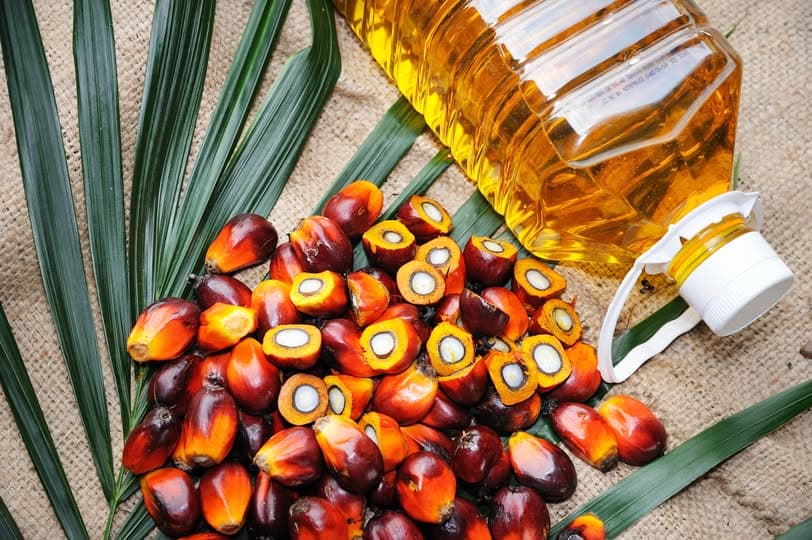
Halal & HACCP Certified
Trusted across 65+ countries
Crude Palm Oil Export Snapshot
The key buyer information at a glance.
1x 20ft container (approximately 20 MT)
1L–25L, drums, flexitank, bulk
FOB, CIF, CFR, Ex-Works
7–14 working days (stock available)
Invoice, PL, COA, B/L, Phyto, SGS
Available (OEM)
Product Overview
Best For
- Food manufacturing
- Commercial frying oil
- Bakery & confectionery
- Wholesale distribution
- Soap production
- Industrial & oleochemical use
Available Grades
- RBD Palm Olein CP6
- RBD Palm Olein CP8
- RBD Palm Olein CP10
- RBD Palm Oil
- Crude Palm Oil (CPO)
- Palm Stearin
- PFAD (FFA 70%+)
Export Options
- Bulk flexitank
- Steel & HDPE drums
- Jerry cans
- Bottled cartons
- Private label / OEM
Detailed Product Description+
Crude palm oil specification from Thailand: The Jit Aree CPO spec sheet covers FFA ≤5%, iodine value 50–55 g I₂/100g, moisture & impurities ≤0.15%, peroxide value ≤5 meq/kg, and saponification value 190–202 — all per MPOB and Codex Alimentarius standards — from $780/MT FOB Bangkok. Jit Aree exports the full range of palm oil products meeting international palm oil specification standards — including crude palm oil specification (CPO) grade with FFA ≤5%, moisture ≤0.1%, iodine value 50–55, and peroxide value ≤5 meq/kg from $780/MT FOB Laem Chabang. We also supply premium RBD Palm Olein (FFA ≤0.1%) in CP6, CP8, and CP10 grades for food manufacturing, and Palm Fatty Acid Distillate (PFAD) with FFA 70%+ for oleochemical, soap, and animal feed industries. Our crude palm oil (CPO) meets MPOB and international trading crude palm oil specification requirements and is supplied in flexitank or ISO tank. Our RBD palm olein is sourced from certified sustainable plantations and processed to deliver a neutral-tasting, heat-stable oil with outstanding shelf life — Lovibond color under 3.0R, Lovibond yellow under 30Y, trusted by food manufacturers across 65+ countries. We also export PFAD (palm FFA 70%) — a byproduct of palm oil refining with high free fatty acid content — used for soap manufacturing, oleochemical production, biodiesel feedstock, and animal feed at $550–700/MT FOB Bangkok in flexitank or drums. For edible oil importers evaluating bulk palm oil specification grades, our export team provides a full specification data sheet and pre-shipment SGS inspection option for every shipment.
Available Crude Palm Oil Grades
Compare grades for international export and bulk supply, then request the one that fits your market.
RBD Palm Olein CP6
- Best Use
- Premium clear frying & retail cooking oil
- Key Specification
- Cloud point ≤ 6°C
- Packaging
- Bottles, jerry cans, flexitank
RBD Palm Olein CP8
- Best Use
- All-purpose frying & food manufacturing
- Key Specification
- Cloud point ≤ 8°C
- Packaging
- Drums, flexitank, bulk tanker
RBD Palm Olein CP10
- Best Use
- Industrial frying & oil blending
- Key Specification
- Cloud point ≤ 10°C
- Packaging
- Drums, flexitank, bulk tanker
RBD Palm Oil
- Best Use
- Food manufacturing & margarine base
- Key Specification
- FFA ≤ 0.1%, Color ≤ 3.0R
- Packaging
- Drums, flexitank, bulk tanker
Crude Palm Oil (CPO)
- Best Use
- Refineries & further processing
- Key Specification
- FFA ≤ 5%
- Packaging
- Flexitank, bulk tanker
Palm Stearin
- Best Use
- Margarine, shortening & soap
- Key Specification
- Melting point 44–56°C
- Packaging
- Drums, bulk
PFAD (FFA 70%+)
- Best Use
- Soap, oleochemicals, feed & biodiesel
- Key Specification
- FFA 70%+
- Packaging
- Flexitank, drums
Technical Specifications
Typical refined-grade parameters. Full Certificate of Analysis (COA) available on request.
Download Crude Palm Oil Spec Sheet (PDF)| Parameter | Specification |
|---|---|
| Crude Palm Oil Specification — FFA (CPO grade) | ≤ 5.0% (as palmitic acid) |
| RBD Palm Olein — FFA (refined grade) | ≤ 0.1% |
| Moisture & Impurities (CPO) | ≤ 0.15% |
| Moisture & Impurities (RBD) | ≤ 0.05% |
| Iodine Value — CPO (Wijs) | 50–55 g I₂/100g |
| Iodine Value — RBD Olein (Wijs) | 56–60 g I₂/100g |
| Melting Point (RBD Palm Olein CP8) | 33–39°C |
| Color (Lovibond 5¼" cell) | ≤ 3.0 Red |
| Peroxide Value | ≤ 2.0 meq/kg (RBD) / ≤ 5.0 meq/kg (CPO) |
| Saponification Value | 190–202 mg KOH/g |
| Unsaponifiable Matter | ≤ 1.0% |
| Cloud Point (RBD Olein CP8) | ≤ 8°C |
Packaging Options
From retail bottles to bulk flexitank — choose the format that suits your market and logistics.
1L, 2L, 5L bottles
10L, 20L jerry cans
25L, 200L drums
Flexitanks
Bulk tanker
Private label / OEM
Commercial Terms
FOB Supply
FOB Bangkok / Laem Chabang for buyers arranging their own ocean freight.
CIF & CFR Quotation
CIF / CFR to your destination port — sea freight and insurance handled by us.
Minimum Order (MOQ)
1x 20ft container (approximately 20 MT)
Payment Terms
L/C at sight, T/T 30/70, or CAD for established trading partners.
Lead Time
7–14 working days (stock available)
Inspection Support
SGS / third-party pre-shipment inspection arranged on request.
For an accurate quotation, send your destination port, required grade, packaging size, quantity, and any private-label requirements.
Documents & Certifications
A complete, compliant document package prepared for your customs clearance.
Final documentation depends on destination country, buyer requirements, product grade, and inspection requirements.
Manufactured under certified standards
Applications & Use Cases
Buyer Guides & Comparisons
Quick answers to help you choose the right product.
Palm oil is semi-solid at room temperature and offers very high oxidative stability, a long shelf life, and a neutral taste, making it ideal for repeated frying and packaged-food manufacturing. Compared with liquid seed oils such as soybean or sunflower, palm oil delivers the highest yield per hectare and is typically the most cost-effective bulk cooking oil for large-volume buyers, while seed oils carry more polyunsaturated fat and a lighter mouthfeel.
Palm oil is the whole oil pressed from the palm fruit. Through fractionation it separates into a liquid fraction — palm olein — and a solid fraction — palm stearin. RBD palm olein (graded CP6, CP8 or CP10 by cloud point) stays clear and pourable, making it the preferred frying and cooking oil, while palm stearin is solid and used for margarine, shortening, and soap. Lower CP numbers mean the olein stays clear at lower temperatures.
Palm oil is higher in saturated fat, semi-solid, and more heat-stable, which suits deep frying, bakery fats, and shelf-stable products at a lower cost per tonne. Soybean oil is liquid, higher in polyunsaturated fat and omega-3/6, with a higher smoke point and a lighter profile favoured for salad oils, dressings, and retail cooking oil. Many manufacturers blend the two to balance cost, stability, and nutrition.
Bulk palm oil is measured by metric tonnes (MT) for weight and by liters or m³ for volume. Key measurements include: (1) Weight: most palm oil trade uses net MT verified by SGS/Bureau Veritas. (2) Free Fatty Acid (FFA): expressed as % palmitic acid — standard CPO is ≤5% FFA. (3) Iodine Value (IV): measures unsaturation (50–55 for CPO). (4) Peroxide Value (PV): measures oxidation (≤5 meq/kg). (5) Moisture & Impurities (M&I): ≤0.15% for standard CPO. For flexitank shipments, volume is measured in liters (density ~0.91 kg/L at 25°C).
Crude palm oil specification is defined by Free Fatty Acid (FFA) content, moisture & impurities (M&I), iodine value (IV), peroxide value (PV), and Lovibond color. Here is the complete crude palm oil specification table used in international trade: | Parameter | CPO Standard Spec | RBD Palm Olein (CP8) | PFAD | |---|---|---|---| | FFA (as palmitic) | ≤5.0% | ≤0.1% | 70%+ | | Moisture & Impurities | ≤0.15% | ≤0.05% | ≤0.5% | | Iodine Value (Wijs) | 50–55 g I₂/100g | 56–60 | 30–40 | | Peroxide Value | ≤5 meq/kg | ≤2 meq/kg | — | | Lovibond Color (5¼" cell) | — | ≤3.0R | — | | Cloud Point | — | ≤8°C (CP8) | — | | Saponification Value | 190–202 | 195–205 | 185–200 | | Unsaponifiable Matter | ≤1.0% | ≤0.5% | — | All Jit Aree CPO and RBD palm olein shipments are supplied with a full Certificate of Analysis (CoA) per lot, SGS or Bureau Veritas pre-shipment inspection available on request. Crude palm oil specification PDF available by contacting our export team.
The crude palm oil (CPO) market in 2026 is shaped by Malaysian and Indonesian production levels, biodiesel mandates, competing vegetable oil prices, and global food demand. Understanding CPO market dynamics is essential for refineries, edible oil blenders, and bulk buyers sourcing from Thailand. **Crude Palm Oil Market Size:** The global crude palm oil market is estimated at USD 65–75 billion annually, representing approximately 40% of global vegetable oil production. Malaysia and Indonesia account for over 85% of global CPO supply. Thailand is a secondary CPO producer but a significant supplier of refined and processed palm oil products. **Crude Palm Oil Price 2026 — FOB Bangkok Reference:** CPO from Thailand in 2026 is priced at USD 780–950/MT FOB Bangkok, tracking Bursa Malaysia CPO futures (BMD) with a 10–30 USD/MT Thailand premium/discount depending on quality grade and shipping terms. RBD Palm Olein CP6/CP8 (fully refined) is priced at USD 900–1,050/MT FOB Bangkok. **CPO Price Drivers:** (1) Indonesian B40 biodiesel mandate — Indonesia's requirement to blend 40% palm oil in biodiesel tightens CPO supply and supports prices; (2) Soybean oil correlation — CPO and soybean oil are substitutable in many applications; when soybean oil rises, CPO demand and pricing follow; (3) El Niño weather cycles — reduced rainfall in Southeast Asia reduces fresh fruit bunch (FFB) yields, tightening CPO supply; (4) China and India import demand — together account for ~35% of global palm oil imports. **How to Source Crude Palm Oil from Thailand:** Jit Aree Vegetable Oil exports CPO and RBD palm olein products from Thailand in ISO flexitanks (20 MT/20ft container) and ISO tanks. We provide full crude palm oil specification documentation per MPOB and CODEX Alimentarius standards, with pre-shipment SGS inspection available. FOB Laem Chabang or CIF terms to 65+ countries. Minimum order: 1 flexitank (20 MT). Contact our export team for a current CPO price quotation and crude palm oil specification PDF.
Frequently Asked Questions
Everything buyers ask before placing a crude palm oil order.
We supply RBD Palm Olein, CP6, CP8, CP10, Crude Palm Oil, Palm Stearin, PFAD. Tell us your application and we will recommend the most suitable grade for your market and budget.
Our standard MOQ is 1x 20ft container (approximately 20 MT). For first-time buyers evaluating quality, smaller trial quantities can be discussed case by case.
Yes. We quote FOB Bangkok / Laem Chabang as well as CIF, CFR and Ex-Works. Send us your destination port and quantity and we will prepare a CIF quotation.
Yes — we offer full private label / OEM service including custom bottle and label design, brand printing and retail-ready packaging in any size.
Commercial Invoice, Packing List, Bill of Lading, Certificate of Origin, Certificate of Analysis (COA), Health Certificate, Halal Certificate, SGS inspection report and Phytosanitary Certificate where required.
Yes. Independent SGS (or equivalent) pre-shipment inspection can be arranged on every container and the report is included in your document package.
Available formats: 1L, 2L, 5L bottles; 10L, 20L jerry cans; 25L, 200L drums; Flexitanks; Bulk tanker; Private label / OEM.
Production lead time is 7–14 working days (stock available). Sea transit then depends on your destination — typically 2–4 weeks after order confirmation.
Yes. With 500K+ tonnes of annual capacity we support recurring monthly shipments and scheduled deliveries under supply agreements.
Crude Palm Oil Export Destinations
We export crude palm oil worldwide. See market-specific ports, transit times and import requirements for your country:
Ready to Import Crude Palm Oil?
Send us your destination port, required grade, packaging size, and quantity. Our export team will prepare a FOB or CIF quotation based on your requirements.
- Destination port
- Quantity
- Packaging
- Grade
- Private label requirement
Or email [email protected] · Response within 24 hours
Other Products You May Need
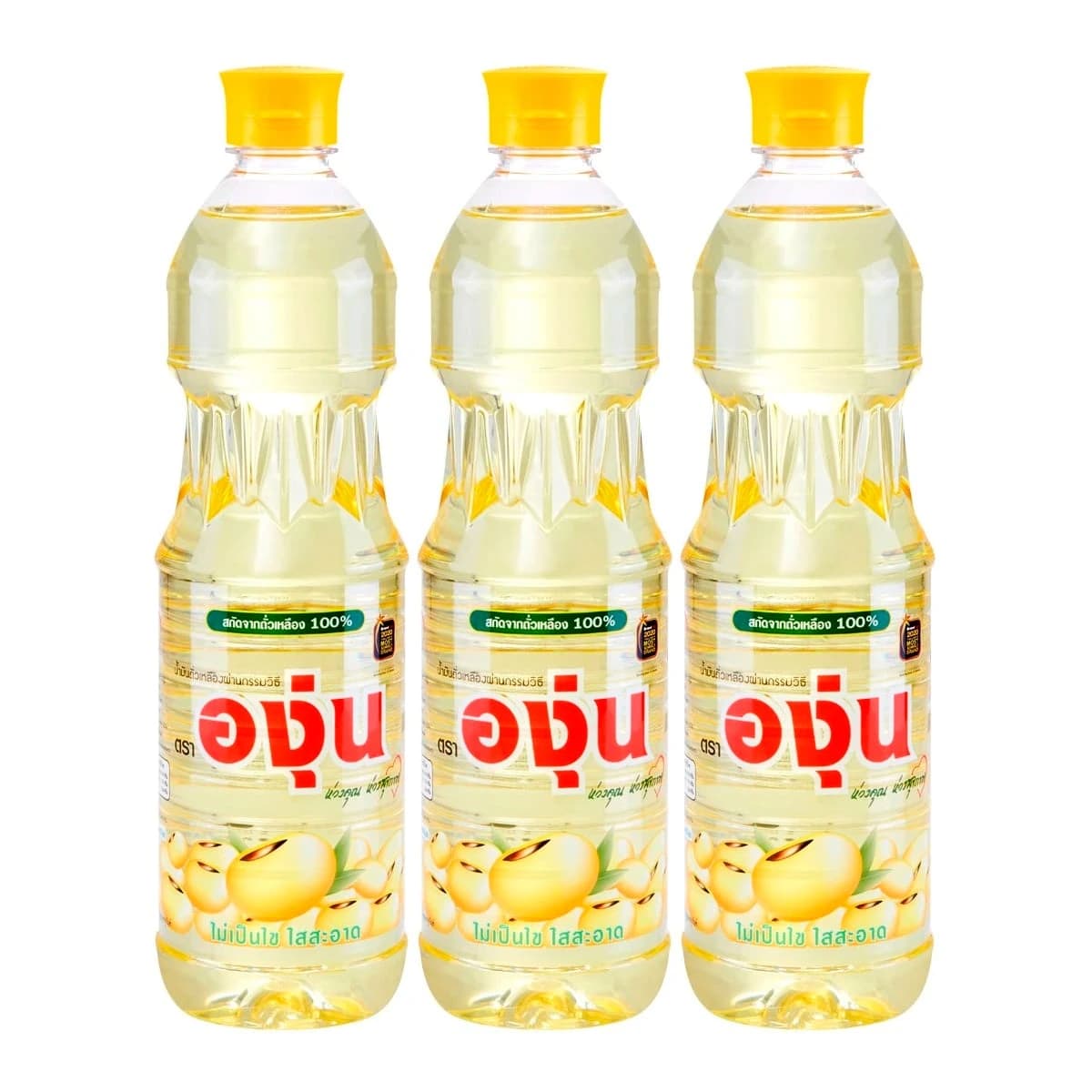 Popular
Soybean Oil
Best for food service and retail cooking oil — neutral taste, great frying stability, Non-GMO available.
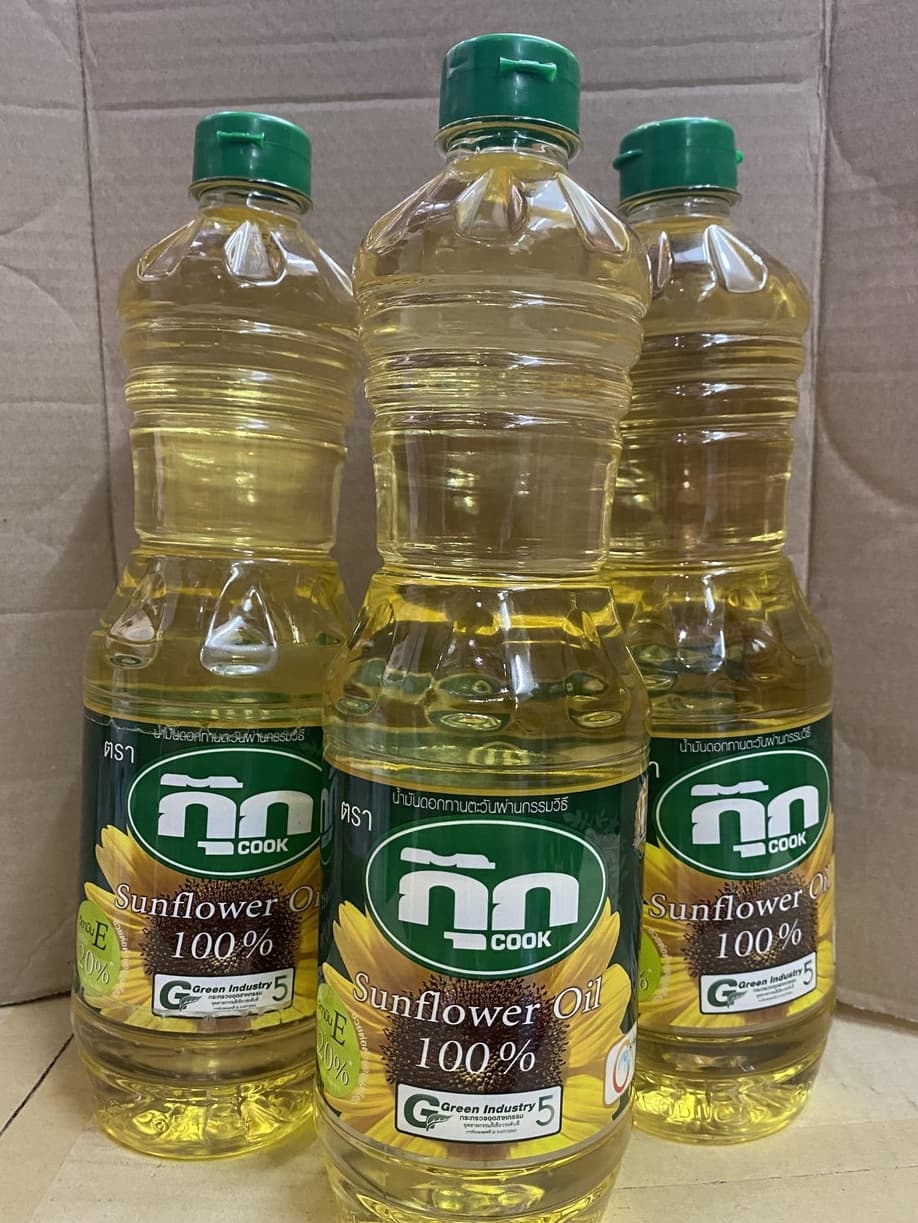 High Demand
Sunflower Oil
Premium cooking oil for retail distribution and food manufacturing — Vitamin E rich, 230°C smoke point, linoleic & high-oleic grades.
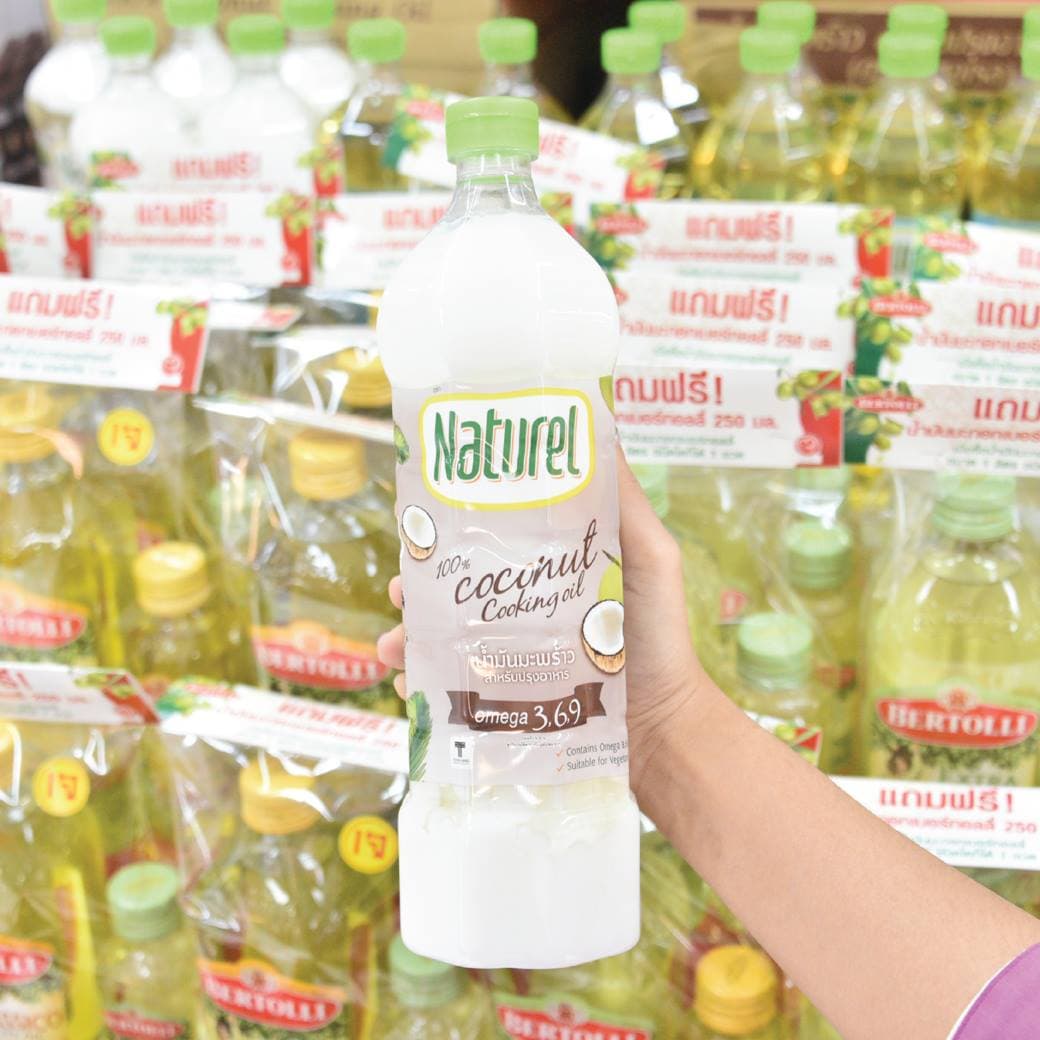 Thai Origin
Coconut Oil
Suitable for food, cosmetics, and industrial buyers — virgin (VCO) & refined (RBD) grades.